How Creative Teachers Can Use AI Without Losing the Human Heart of Teaching
AI is moving quickly in education.
For some teachers, it feels exciting.
For others, it feels unsettling.
Creative educators often carry a specific concern:
Will AI replace what makes teaching human?
That hesitation isn’t resistance. It’s care. It’s the instinct to protect the parts of teaching that can’t be automated — the relationships, the improvisation, the creative spark.
Teaching is creative work. It requires intuition, relationship, improvisation, and judgment. It is not a script. And when new tools enter the space, especially powerful ones, it’s reasonable to ask what they might disrupt.
The conversation around AI often swings between extremes — either it will revolutionize everything, or it will ruin everything.
Neither is particularly helpful.
The more grounded question is this:
How can AI support creative teachers without diminishing the human heart of teaching?
The Fear Behind the Tool
When educators hesitate around AI, the fear is rarely about technology itself.
It’s about:
- Losing originality
- Students becoming overly dependent
- Ethical gray areas
- Administrative pressure to “do more”
- The exhaustion of learning one more new system
Creative teachers already juggle curriculum, differentiation, grading, parent communication, and emotional labor — often all before lunch. The idea of adding AI into that mix can feel like another demand rather than a relief.
And yet, burnout is real. Planning fatigue is real. Decision overload is real.
The issue is not whether teachers need support.
The issue is what kind of support preserves professional judgment instead of replacing it.
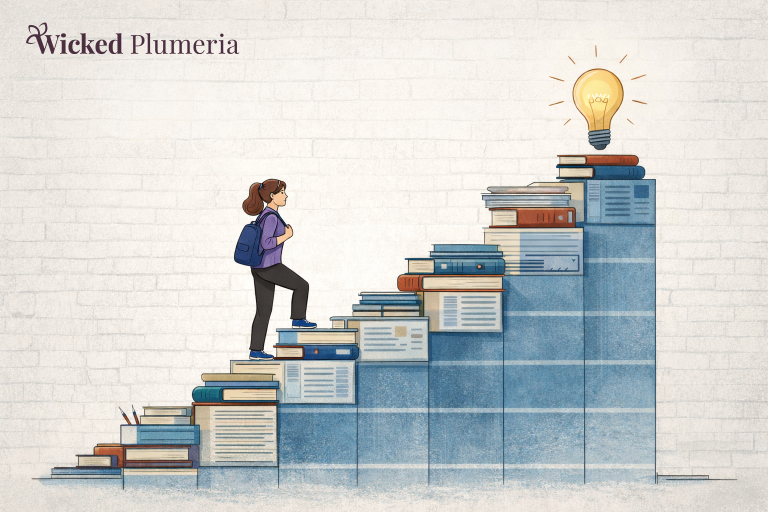
Reframing AI as a Lever, Not a Replacement
AI should not replace imagination.
It should reduce friction.
In my own classroom, I don’t use AI to design the creative core of a project. I use it to move faster through the scaffolding — drafting outlines, generating a first-pass rubric, mapping standards alignment.
The creative decisions still belong to me. The relationships still belong to me. The room still belongs to the students.
AI simply helps me protect my energy for those parts.
When used intentionally, AI becomes a lever — something that lifts weight off your cognitive load so your creative energy can go where it matters most.
Think of it as scaffolding.
You still design the learning.
You still shape the experience.
You still know your students.
You still bring your personal voice.
It moves you faster through the mechanical parts, so you can spend more time in the relational and creative ones.
Structure, when designed well, creates freedom. I’ve seen it in my own classroom — the clearer the workflow, the more creative the work becomes. When planning is streamlined, there’s more space for imagination and relationship-building.
AI can be part of that structure.
Three Grounded Ways Creative Teachers Can Use AI
You don’t need to overhaul your classroom to experiment thoughtfully. Start small.
1. Use AI for Lesson Scaffolding
Instead of asking AI to write an entire lesson, use it to generate a rough outline.
For example:
- Ask for three possible essential questions for a unit.
- Generate a draft sequence of activities.
- Build a unit outline to meet a specific list of standards.
- Brainstorm formative assessment ideas.
You refine. You adjust. You humanize.
AI becomes a brainstorming partner, not the author.
2. Draft Rubrics and Refine Them
Rubric writing is important — and time-consuming.
Use AI to generate a baseline rubric aligned to your objectives. Then adjust language to match your classroom tone and expectations.
Use AI to break down a point value system to provide students a clear and concise list of expectations and how they can get the grade they need.
This protects your time while keeping your standards intact.
You remain the instructional decision-maker.
3. Brainstorm Differentiation Pathways
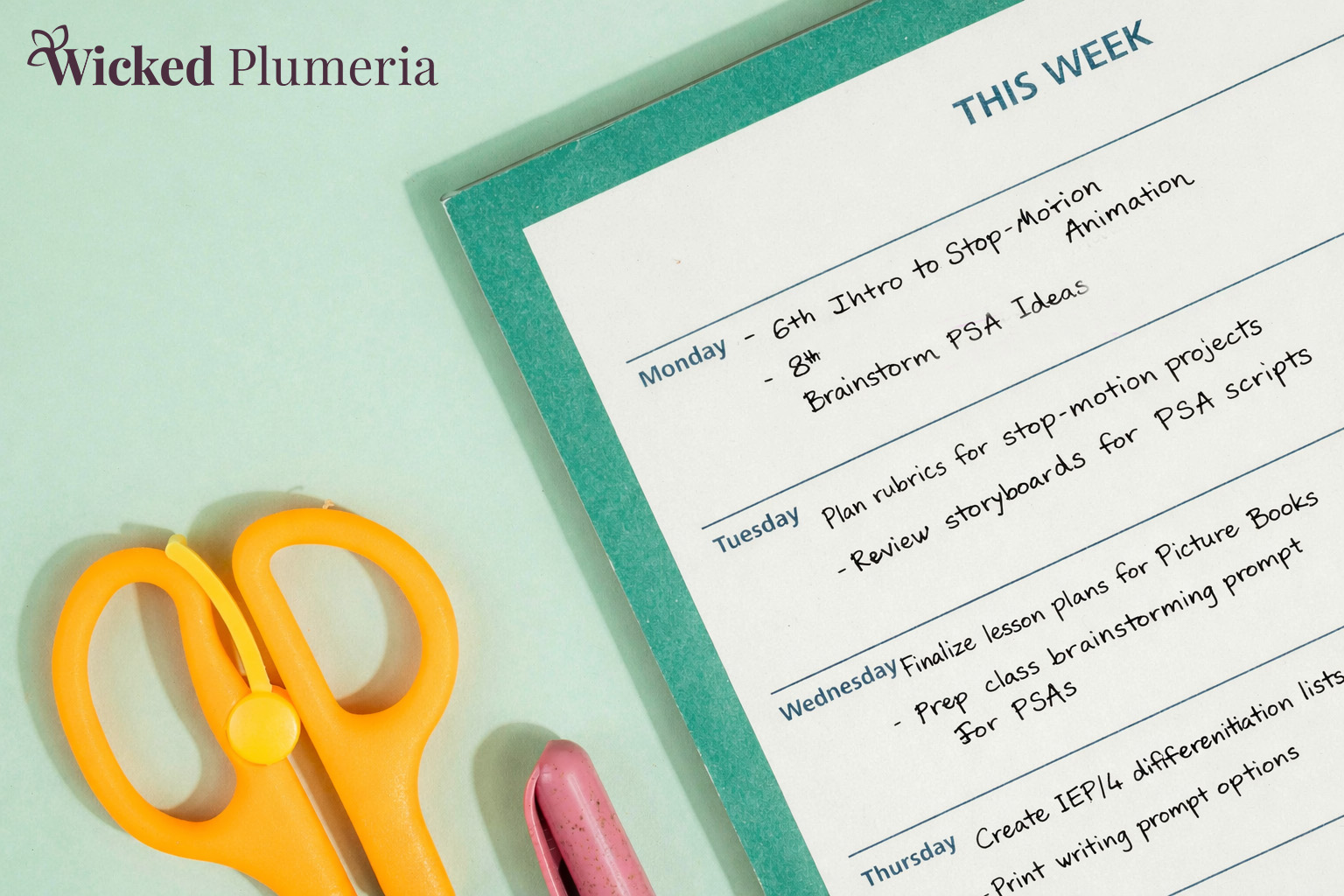
Differentiation often requires mental flexibility at the end of a long day. I know in my classroom it can sometimes feel like a juggling act to make sure I’ve met every IEP and 504 accommodation for each lesson while also providing extension activities for my high-achievers.
AI can help generate alternative ways to present content:
- Visual variations
- Extension prompts
- Simplified explanations
- Project modifications
Again, you curate. You decide what fits your students.
The tool expands possibility — it doesn’t dictate it.
The Question Isn’t Whether AI Belongs
AI is already here.
The real question is how we choose to use it.
Creative teachers do not need to surrender their intuition to technology. But they also don’t need to reject tools that can reduce unnecessary strain.
When used with intention, AI can protect your creative energy rather than deplete it.
It can simplify planning.
It can clarify structure.
It can help you build classrooms that feel sustainable instead of overwhelming.
The human heart of teaching isn’t threatened by thoughtful tools.
It’s strengthened when teachers have the capacity to focus on what truly matters.
That’s where Wicked Plumeria lives — at the intersection of structure and imagination.
Try the AI Planning Framework
Want a simple structure for using AI in your classroom without losing your voice?
Download the Creative Teacher’s AI Planning Framework.